

One of the most frustrating parts of freelancing isn’t rejection.
It’s silence.
You send:
- Proposals
- DMs
- Portfolio links
- Follow-ups
…and get absolutely nothing back.
No reply.
No feedback.
No opportunity.
By 2026, this has become one of the biggest struggles freelancers face online.
And honestly?
Most freelancers are focusing on the wrong things.
The problem usually isn’t your skill.
It’s:
- Positioning
- Visibility
- Timing
- Communication
- Trust
Let’s break down why freelancers don’t get replies – and what actually works now.

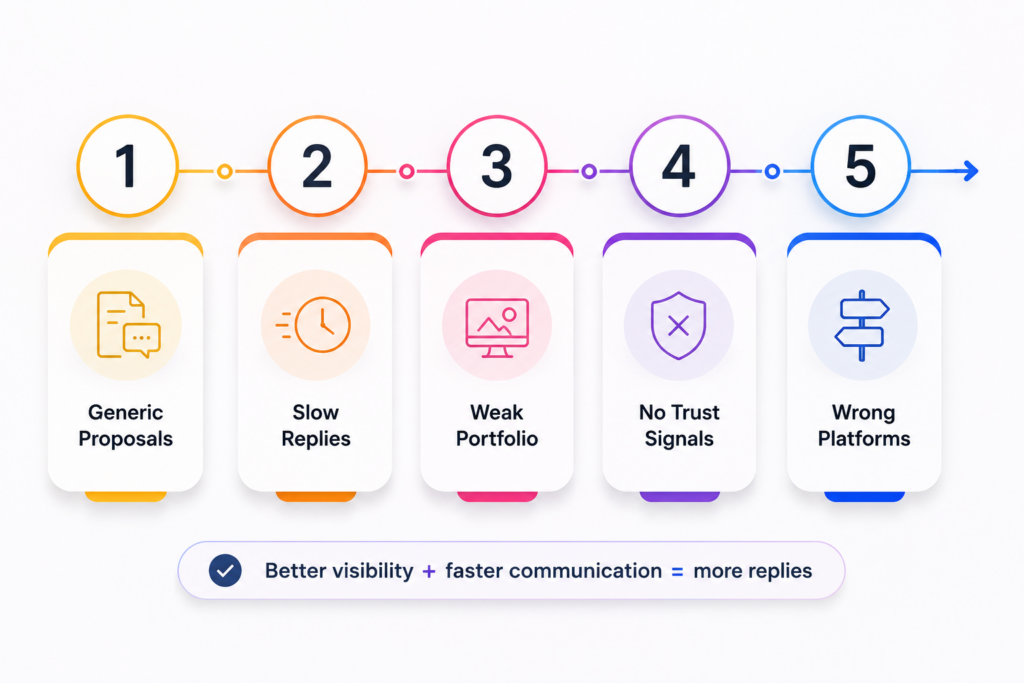
1. Your Proposal Looks Like Everyone Else’s
Clients today receive:
- Hundreds of messages
- Generic introductions
- Copy-paste proposals
- AI-generated spam
Most freelancers sound identical.
Example:
“Hi sir, I can do this project perfectly. Please hire me.”
That instantly gets ignored.
Clients don’t care about:
- Your excitement
- Your generic skill list
- Random buzzwords
They care about:
✅ Can you solve the problem?
✅ Do you understand the task?
✅ Can they trust you?
What To Do Instead
Make your proposal:
- Short
- Specific
- Outcome-focused
Bad:
“I’m a professional SEO expert with 5 years experience.”
Better:
“I noticed your site isn’t targeting comparison-intent keywords yet – that’s probably why traffic isn’t converting well. I’d approach this differently.”
That feels human.
And humans get replies.
2. You’re Applying Too Late
In 2026, speed matters more than ever.
Most freelancers reply:
- Hours later
- Sometimes days later
By then, the client already:
- shortlisted people
- started calls
- closed the project
The first few quality replies usually get the most attention.
What To Do Instead
You need:
- Faster response systems
- Better workflows
- Ready proposal structures
This is where AI tools are quietly becoming a massive advantage for freelancers.
Tools like ShooShoon help freelancers:
- Generate proposals quickly
- Create professional follow-ups
- Improve pricing communication
- Reply faster without sounding robotic
And honestly, faster quality communication alone can dramatically increase reply rates.
3. Your Portfolio Doesn’t Build Trust
Many freelancers send:
- messy Google Drive folders
- random PDFs
- outdated work
- portfolios with no context
Clients don’t just want work samples anymore.
They want:
- credibility
- structure
- proof
- positioning
If your portfolio feels confusing, clients leave.
Fast.
What To Do Instead
Your portfolio should clearly show:
- What you do
- Who you help
- Results achieved
- Why clients should trust you
The best portfolios today aren’t just “beautiful.”
They’re easy to understand.
Modern tools like ShooShoon are making this easier by helping freelancers create cleaner portfolio experiences alongside proposal workflows.
And platforms like Feedcoyote improve discoverability by helping freelancers showcase profiles where opportunities already exist – instead of portfolios sitting unnoticed in random links.
That shift matters.
A lot.
4. You Sound Desperate
Clients can sense desperation immediately.
Examples:
- “Please give me one chance”
- “I really need work”
- “I’ll do it for cheap”
This lowers perceived value instantly.
Ironically:
The more you chase clients, the less premium you appear.
What To Do Instead
Position yourself calmly and professionally.
Instead of begging:
- identify the problem
- suggest a direction
- show confidence
Freelancers who sound like consultants get better replies than freelancers who sound like applicants.
5. You’re Competing in Saturated Places
This is a huge one.
Many freelancers only rely on:
- Upwork
- Fiverr
- crowded job boards
Which means:
- extreme competition
- low prices
- poor visibility
Even talented freelancers get buried.
What To Do Instead
In 2026, discoverability matters more than applications.
Smart freelancers are moving toward:
- communities
- network-driven opportunities
- modern freelance ecosystems
Platforms like Feedcoyote are growing because freelancers are tired of:
- endless bidding wars
- low-quality leads
- invisible profiles
Instead of fighting for attention, the focus shifts toward:
- visibility
- trust
- professional identity
- long-term collaboration
And honestly, that’s where freelancing is heading.
6. Your Follow-Ups Are Weak (Or Nonexistent)
Most freelancers either:
- never follow up
OR - spam follow-ups awkwardly
Both hurt opportunities.
What To Do Instead
Good follow-ups are:
- short
- calm
- value-driven
Example:
“Hey, just following up — I also noticed a few quick improvements that could help your onboarding flow if you’re still exploring options.”
That feels useful instead of annoying.
Again, this is where AI-assisted communication tools are helping freelancers save huge amounts of time.
7. You’re Selling Skills Instead of Outcomes
Clients don’t buy:
- Photoshop
- SEO
- Webflow
- Writing
They buy:
- more sales
- more traffic
- faster growth
- cleaner systems
The freelancer who talks about outcomes always gets more replies.
Most freelancers don’t get replies because:
- they blend in
- communicate poorly
- apply too late
- rely on overcrowded platforms
But the game is changing.
In 2026, freelancers who win are the ones who combine:
- strong positioning
- fast communication
- better visibility
- trust-building systems
That’s why modern tools and ecosystems are becoming so important.
Platforms like Feedcoyote help freelancers become more discoverable.
Tools like ShooShoon help them communicate faster and more professionally.
Together, they solve one of the biggest freelance problems today:
Getting noticed before someone else does.
Because in freelancing, the best freelancer doesn’t always win.
The freelancer who gets seen, trusted, and remembered usually does.


