The way people work has completely changed. In 2026, you don’t need an office to build a serious career. But one question still comes up again and again:
Should you choose freelancing or a remote job if your goal is higher income?
Let’s break this down honestly – no hype, no LinkedIn fluff – just real insights based on how the market is evolving.
Income Potential: Freelance vs Remote
Freelancing
Freelancing has the highest earning ceiling — no doubt about that.
You’re not tied to a fixed salary. Your income depends on:
- Skills
- Positioning
- Network
- Pricing confidence
In 2026, skilled freelancers in areas like AI, design, copywriting, and development are easily crossing $3K–$15K/month.
But there’s a catch: income can be inconsistent, especially early on.
Remote Jobs
Remote jobs offer predictable income.
You get:
- Fixed monthly salary
- Stability
- Benefits (sometimes)
- Less stress about finding clients
In 2026, remote salaries vary widely:
- Entry: $800–$2K/month
- Mid-level: $2K–$5K/month
- Senior roles: $6K–$10K/month
The upside is stability. The downside? Income growth is slower.
Growth Speed
Freelancing = Faster Growth (If You Play It Right)
Freelancers control their own growth curve. You can:
- Raise prices anytime
- Work with global clients
- Add multiple income streams
One viral case study, one niche pivot, or one strong network can 10× your income.
But it requires initiative and consistency.
Remote Jobs = Linear Growth
Remote careers usually follow a ladder:
Junior → Mid → Senior → Lead
Salary jumps happen, but they’re incremental and depend on company cycles, not your speed.
If you prefer structure, this works. If you want fast upside, it can feel limiting.
Skill Leverage
This is where freelancing wins big in 2026.
Freelancers can:
- Productize services
- Build personal brands
- Sell templates, courses, audits
- Build agencies
Remote employees usually can’t monetize skills outside company boundaries (or there are restrictions).
That said, remote roles help you build deep expertise and credibility.
Stress & Lifestyle
Let’s be real — money isn’t everything.
Freelancing Stress Factors
- Client hunting
- Payment delays
- Scope creep
- Uncertain months
Remote Job Stress Factors
- Meetings
- Time zones
- Corporate politics
- Limited freedom
Freelancing = freedom + uncertainty
Remote jobs = stability + structure
Choose your stress type.
Global Opportunity in 2026
The biggest shift? Geography matters less than ever.
Indian freelancers are earning in dollars.
Remote workers are joining global startups.
But freelancers have one advantage: no gatekeepers.
You don’t need to pass 5 interviews to land a client.
You just need visibility and trust.
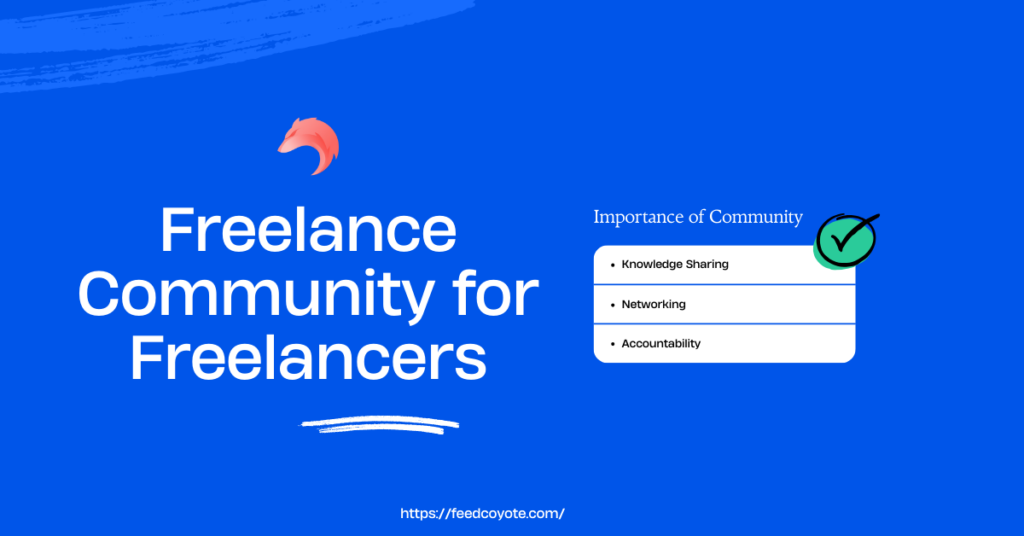
This is why communities and networks are becoming more powerful than traditional hiring funnels.
Where Most Freelancers Struggle (And Why Many Choose Remote Instead)
Here’s the honest truth.
Most freelancers don’t fail because of skill.
They fail because of:
- Lack of network
- Low-quality clients
- Marketplace competition
- Trust issues
Many people move to remote jobs simply because finding good clients feels exhausting.
And this is exactly where the ecosystem is changing.
The Rise of Community-Led Freelancing
In 2026, the smartest freelancers aren’t just relying on marketplaces anymore.
They’re building private pipelines through communities, referrals, and trusted networks.
Instead of bidding wars, they focus on:
- Warm opportunities
- Vetted clients
- Peer recommendations
Platforms like Feedcoyote are emerging from this shift.
Rather than acting like a crowded marketplace, the goal is simple: help freelancers discover real opportunities through signal, not noise.
When you reduce randomness in client discovery, freelancing becomes far more predictable — almost like a hybrid between freelance freedom and remote-job stability.
And that’s where things get interesting.
So, What Pays More in 2026?
If we’re talking pure numbers:
👉 Freelancing has the higher ceiling
👉 Remote jobs have the higher floor
Meaning:
- Freelancing can make you richer
- Remote jobs make you safer
But the gap is shrinking.
With better communities, smarter positioning, and stronger networks, freelancing is becoming more stable than ever before.
If you want:
- Predictable income → Remote job
- Unlimited upside → Freelancing
- Freedom + smarter stability → Modern freelancing (community-driven)
2026 isn’t about choosing one forever.
Many professionals are blending both:
- Remote job for base income
- Freelance on the side for leverage
The smartest move? Stay adaptable.
Because the future of work isn’t remote vs freelance anymore.
It’s ownership vs dependency.
And the people who build networks will always win.